Weipa Australia
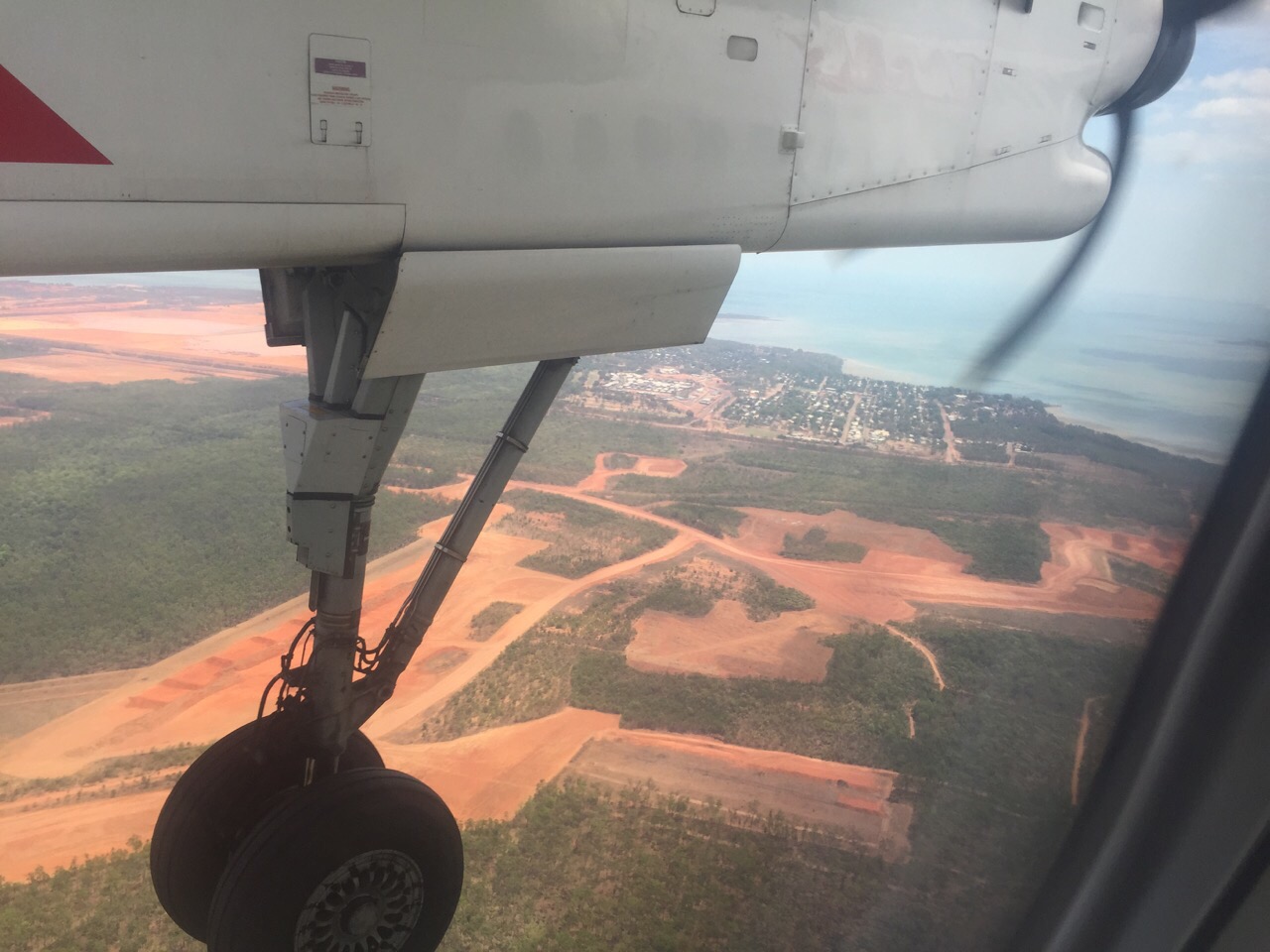
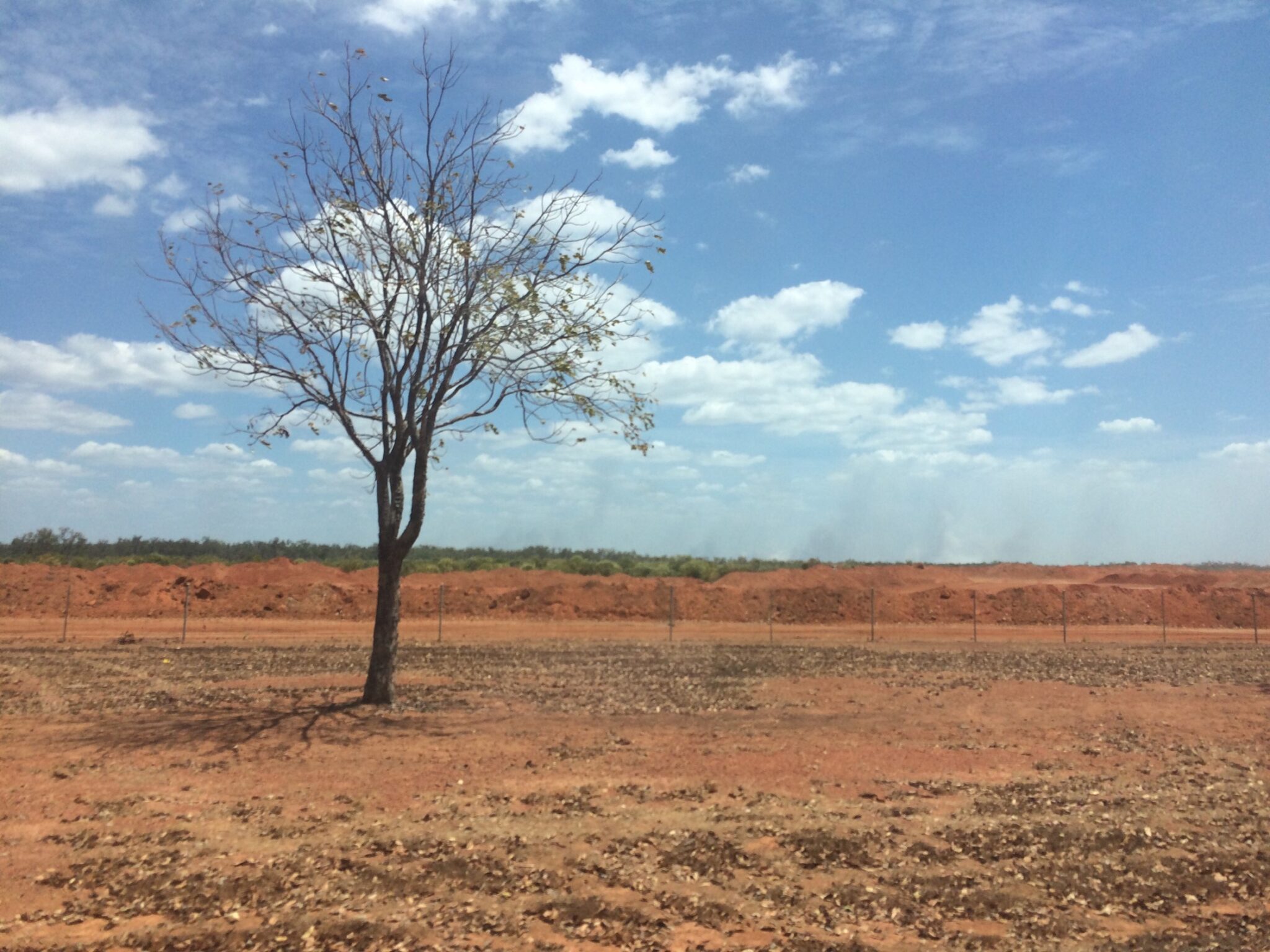
This unique and beautiful industrial town of Weipa in far North Queensland is surrounded by bright red soil, striking red cliffs, glorious blue waters, and rich geographical beauty and cultural heritage. Whether you enjoy stunning sunsets, beautiful vistas, fishing or hiking, there is plenty to see and do in Weipa.
1. Where is Weipa Located in Australia?
Weipa is located on the west coast of Cape York Peninsula, about 200 kilometres from the tip of Australia and less than 200 kilometres from the east coast. It is approximately 804 road kilometres and 580 air kilometres from Cairns. It is the northernmost sizeable town in Far North Queensland, with a population of a little over 4,000.
2. Rio Tinto Mining Company | Making A Difference
It is not a touristy destination – it is a thriving mining town. The Far North Queensland region is rich in bauxite, and much of the township and surrounding land is leased to Rio Tinto, a mining company. Bauxite, a reddish-brown ore and the source of aluminum. Rio Tinto Weipa has made significant investments into the local community, employment, infrastructure and is a major contributor to the regional economy. Rio Tinto’s operations in Weipa consist of three bauxite mines, processing facilities, shiploaders, an export wharf, two ports, power stations, a rail network, and ferry terminals.
3. Getting To Weipa Qld
The easiest way to reach Weipa is by flying. Several airlines offer regular flights from major Australian cities to Weipa. A new Weipa airport commenced operation with the arrival of an Ansett ANA Fokker Friendship aircraft on 11 October 1967. Today, Qantas and Alliance Airlines offer direct flights from Cairns to Weipa (90 minutes airtime). The airport (WEI) is located 15 mins from the township with several charter airlines also servicing Weipa for passenger and freight transport.
4. Best Time to Visit Weipa?
Weipa enjoys a tropical climate, with two distinct seasons – the ‘wet’ and the ‘dry’. The tropical wet season and high humidity are from November to April, making the best time to visit Weipa and Cape York during the cooler months from May to October. Other times of the year, you might find the roads closed and flooded in. It is crucial you check the road conditions prior to travelling.
On average, Weipa receives 2,051mm of rain annually, with 97% of that falling in the wet season. Average temperatures are between 18ºC and 36ºC all year round.
Each year around 60,000 visitors make the trip to the tip of Australia. The far north Queensland hub’s Peninsula is truly idyllic and one of Australia’s most remote landscapes not to be missed.
5. Recreational Activities
Lakes McLeod and Patricia are two freshwater recreational lakes with diverse birdlife and excellent public amenities such as BBQs, picnic tables, public toilets and a children’s playground. Located just past Evans Landing and in front of the Weipa Caravan Park and Camping ground is Gongbund Beach. Perfect for sunset walks and spectacular scenery.
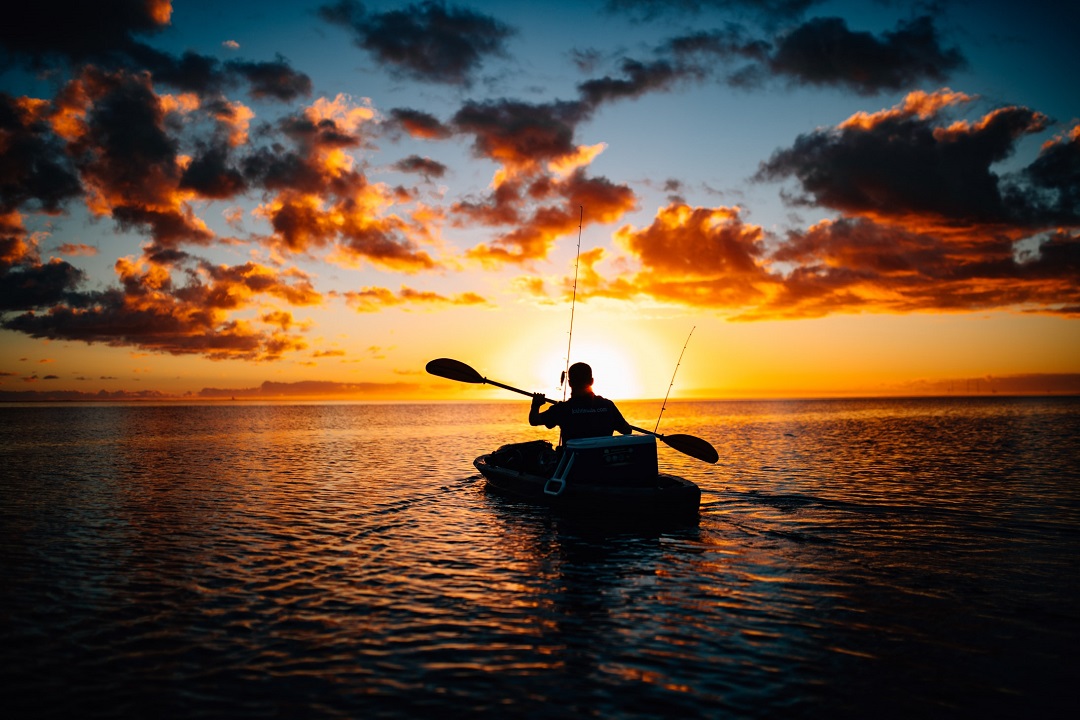
Fishing in Weipa is a popular pastime for locals and visitors. If you are an avid angler, you will be delighted with the narrow Peninsula’s fishing opportunities that rests between the Embley and Mission Rivers. There are over 40 species of fish found in estuaries and offshore waters surrounding Weipa.
There is a selection of walking tracks nearby Uningan Bicentennial and Recreational Reserve, boasting stunning open woodlands, mangroves and palm forests that weave through 9 kilometres of the dense reserve.
6. Be CrocWise
Crocodiles inhabit the waterways around Weipa like in the rest of Cape York. Weipa beaches are not for swimming, but they are good for other beach activities such as 4-wheel driving, camping and fishing. Locals sail and swim in the man-made freshwater Lake Patricia and Lake McLeod. These lakes make for a popular recreational area with picnic tables, BBQs and public toilets. For more information on crocodiles and how to be CrocWise click HERE.
Note: As most land around Weipa is Rio Tinto mining lease or under indigenous control, visitors need to ensure they observe access restrictions and have all the necessary permits required when venturing out.
7. Weipa Amenities
Weipa has a public library, cultural centre, squash courts, two sets of tennis courts, cricket and football ovals, a lawn bowls club, 9-hole golf course, dirt kart track, horse owners club, bow shooting range, rifle range, pottery club, gymnastics club, aquatic centre and bicycle and pedestrian pathways. There are also netball and basketball courts as well as football fields.
8. Eat, Drink, Shop
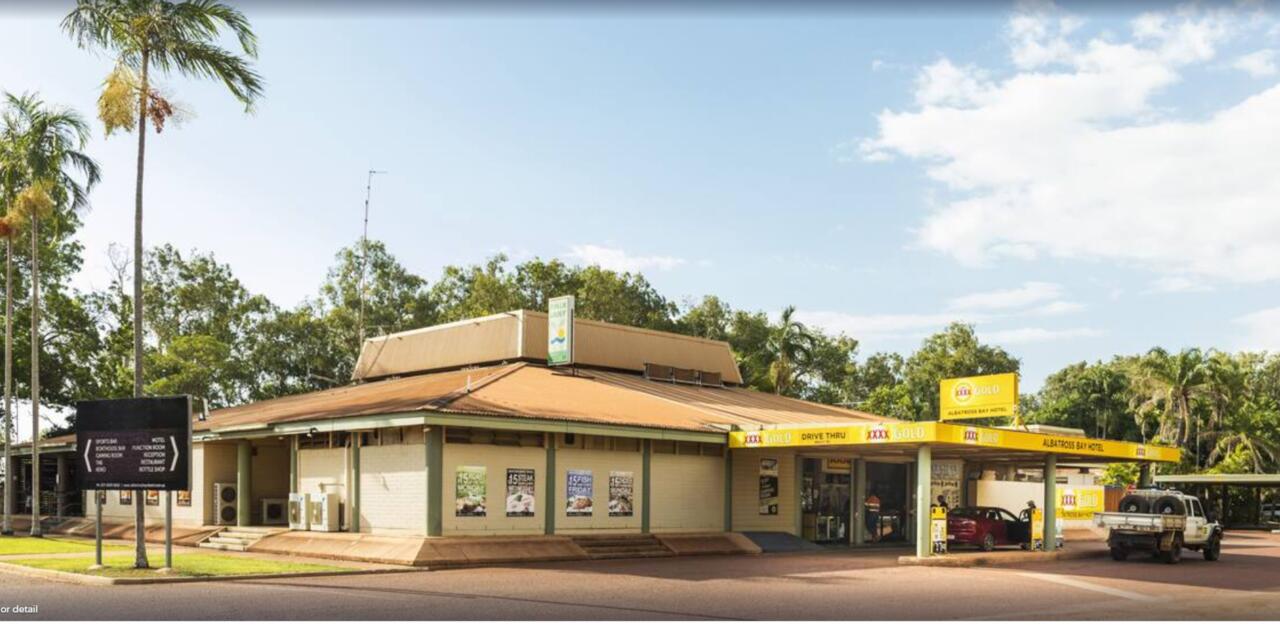
The Albatross Bay Resort provides locals and visitors with dining and bar facilities – Deck Bar & Restaurant, Function Room, Sportsman’s Bar, Gaming and BBQ area. An ideal location to catch a North Queensland sunset. At Nanum, the shopping precinct has a Woolworths supermarket, bakery, coffee shop, travel agent, real estate, bottle shop, clothing shop, post office, newsagency/sports shop/gift shop and butcher. Woolworth’s is open 6 days a week from 8am – 7pm, 9pm Thursday and 5pm on Saturday.
There is also a chemist, camping and fishing store and within walking distance is a gift shop, furniture and white-goods store, credit union and Centrelink office. At Evans Landing, you will find a Mitre 10 hardware/nursery store and several mechanical workshops.
9. Government Facilities
Since the 1980s, Weipa has become a regional centre for federal and state government organisations with facilities that include: a major hospital, dentist, medical centre, Western Cape College (schooling to Year 12, and a boarding facility for students from remote centres), light industrial businesses servicing the mine and local communities and regional surveillance force Army base.
10. Weipa Accommodation
In need of somewhere to stay during your visit to Weipa? Click HERE and take a look at all the Booking.com’s Weipa accommodation options.
Weipa Camping Ground
The Weipa Camping Ground is located on the beach providing a picturesque backdrop for stunning afternoon sunsets. Swimming in the onsite tropical pool is the safest option away from the dangers of crocodiles, marine stingers and searing heat during the hot summer months.
11. Where The Locals Live?
Weipa Town has grown over the last 50years. The mining operation has developed to such an extent that the original accommodation of 12 houses and single quarters for 90 people has increased to approximately 1,200 houses, duplexes and flats. Most of the accommodation in town is owned by Rio Tinto Aluminium and rented to staff. However, some of the land has become freehold, with some individuals, local contractors and government departments choosing to build their own homes. Privately owned properties in Weipa now amounts to 47%.
12. Traditional Owners
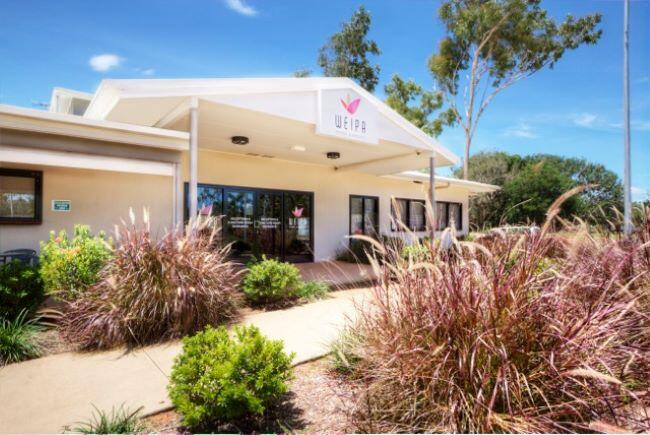
The town’s name ‘Weipa’ comes from the Anhathangayth Aboriginal language ‘Waypa’, which means ‘Fighting Ground’. The traditional owners, “Alngith Aboriginal people,” work closely with Rio Tinto to implement agreements ensuring that the benefits generated from mining support future generations and that important cultural heritage sites are looked after.
Weipa began as a Presbyterian Aboriginal mission outpost in 1898. The “Comalco Act of 1957” revoked the reserve status, giving the company 5,760 square km of Aboriginal reserve land on the west coast of the Peninsula and 5,135 square km on the east coast of Aboriginal-owned (though not reserve) land. Mining commenced in 1960. The mission became a government settlement in 1966 with continued attempts by Comalco to relocate the whole community elsewhere. The company then built a new town for its workers on the other side of the bay. Today, several other communities are located relatively closely to Weipa, including the Indigenous communities of Napranum, Mapoon and Aurukun.
Napranum, which means ‘meeting place’, is located 13km southwest of Weipa and home to approximately 1000 people. There is a second supermarket/white goods store in Napranum open 7 days a week. Mapoon, located 75km north of Weipa, is a community of approximately 260 people. The name ‘Mapoon’ translates to ‘place where people fight on the sand-hills. Aurukun is located 178km south of Weipa and is home to approximately 1100 people.
13. History of Weipa
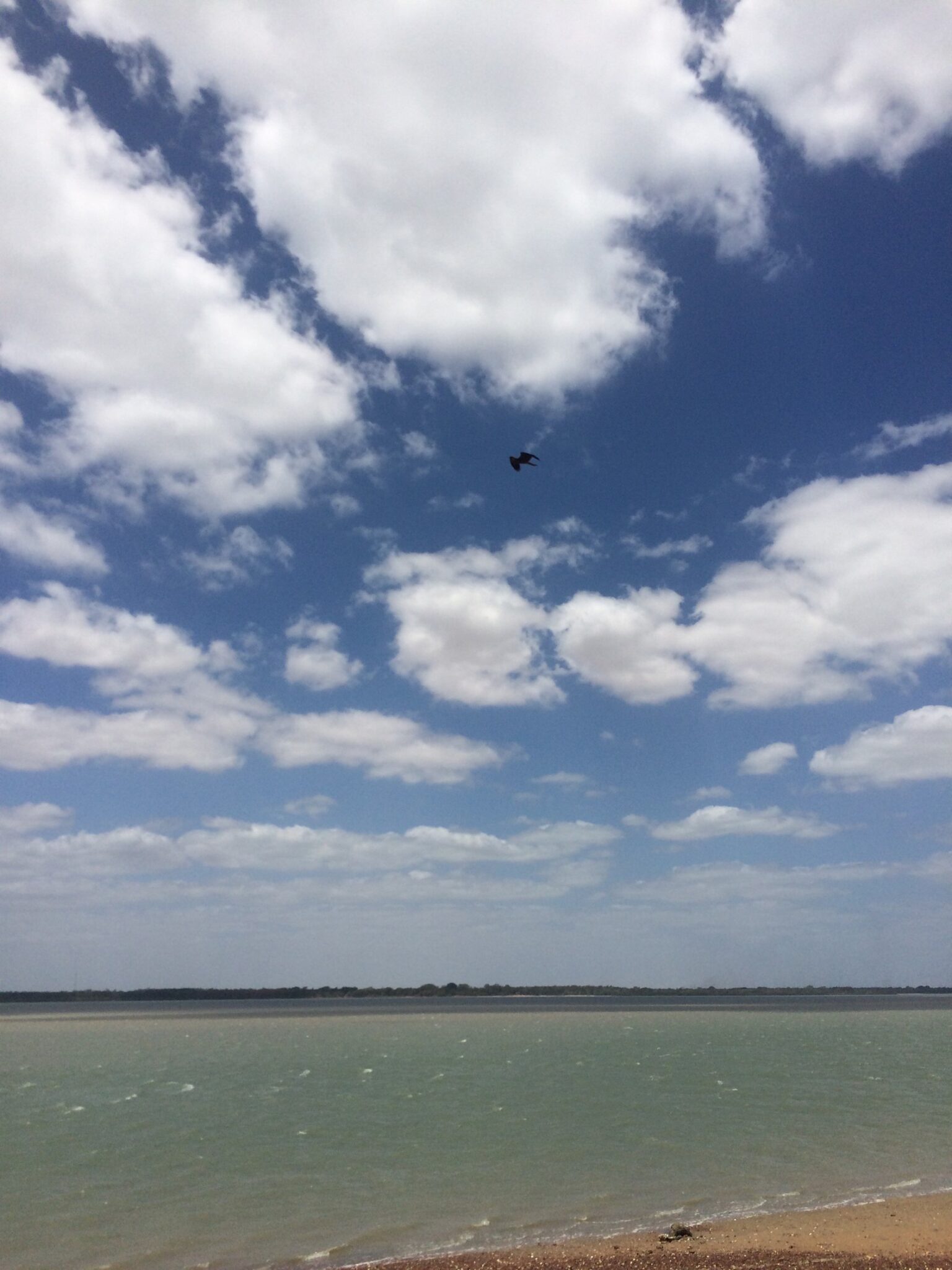
Australia is the world’s number one bauxite mining country. Cape York has some of the richest deposits in Australia. Weipa would probably not exist without bauxite mining and would not be the place it is today. Weipa deposits were first reported in the early 1700s. In 1606, Weipa was the first recorded landing in Australia by European (Dutch) explorer Willem Janszoon on his ship the Duyfken. This was 164 years before Lieutenant James Cook sailed up the east coast of Australia. Two centuries later, in 1802, navigator Captain Matthew Flinders recorded the red cliffs of Weipa when sailing along the western shore of Cape York.
Henry James Evans OBE (7 November 1912 – 9 November 1990)
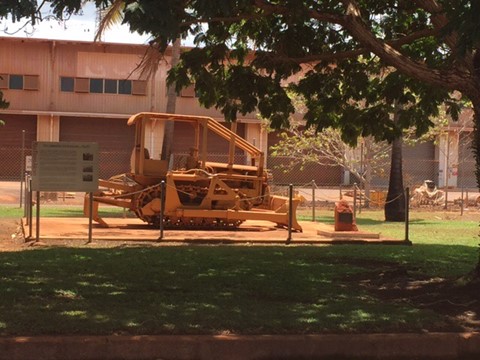
In 1955 leading exploration geologist Harry Evans discovered immense bauxite deposits on Cape York Peninsula’s west coast. His findings led to the formation of Comalco (Commonwealth Aluminium Corporation of Australia) in December 1956 and bauxite mining at Weipa. In 1963 mining began, and the production has multiplied from 453,365 tonnes in 1964 to roughly 35 million tons of bauxite annually.
The township of Weipa was officially opened in 1967 by the Premier of Queensland, Hon G.F.R. (Frank) Nicklin. The opening monument comprising a tri-lon of three cast aluminium stelae is situated on parkland near the Weipa Town Authority centre at Kumrumja. The Weipa township and aerodrome were formally excluded from the Cook Shire and constituted a separate local authority area under the terms of the Commonwealth Aluminium Corporation Pty Limited Agreement Act of 1957.
Weipa Mining
Weipa Mining Town

Weipa 4
Bauxite Mining Weipa Australia
Weipa Australia
Weipa Australia
Weipa Australia
Weipa Outback Mining Town
14. Bauxite Mining Town
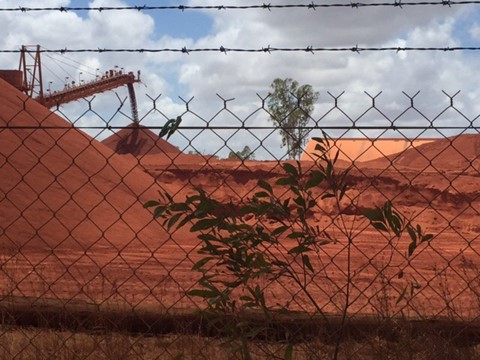
Weipa was built from bauxite mining and today has grown the far North Queensland town to a population of over 3,500. The present town was constructed mainly by Comalco (now Rio Tinto), a large aluminium company that began making trial shipments of bauxite to Japan in 1961. A railway was constructed to transport the ore from the mine at Andoom to the export facility’s dump at Lorim Point. The bauxite mine is the world’s largest, with continuing planned expansions. The development of Amrun in 2018 extended the life of Weipa’s bauxite operations for decades to come providing job security and business growth in the region.
Weipa mining operators employ over one-third of its residents and fly in contractors. Comalco’s main plant, offices and workshop facilities are situated at Lorim Point. This is where you can see bauxite being loaded onto ships. Humbug Wharf (diagonally opposite the Powerhouse) is where the Barge deliveries are made.
Mining Operations
The operation consists of a few open-cut mines where front end loaders extract the ore and load it onto huge trailers, which haul the ore to a dump station. The ore is loaded onto conveyors and trains at the dump station, which takes it to the Lorim Point plant. At the plant, the ore is screened and washed before being loaded onto ships to Gladstone on the central Queensland coast. Where aluminium is extracted from the ore, and some of the byproducts are exported overseas.
Following the discovery of bauxite deposits near Weipa in 1955, a small exploration camp (Top Camp) was established at Munding in mid-1956. Under the terms of the Commonwealth Aluminium Corporation Pty. An area for a township was excised from the Cook Shire local authority area, and Comalco became the manager of the new town based on land near Kumrunja (Rocky Point) on the south side of the Mission River.
As the mining operations expanded, so too did the town. A second suburb developed at Trunding (Neighbourhood Two) 1975 on mined land in the mid-1970s, before further expansion southwards to the suburb of Nanum during the 1990s. The most recent suburban construction is the Golf Links Estate adjacent to the Carpentaria Golf Club, a 9 hole course.
The land and rehabilitation team is responsible for revegetation after mining, which improves the effects on the environment, fauna, and flora. A regeneration nursery was constructed in 2013. Since then tens of thousands of seedlings have been nurtured and planted to help rehabilitate approximately 50 hectares of mined land.
15. Famous Indigenous Artist Weipa
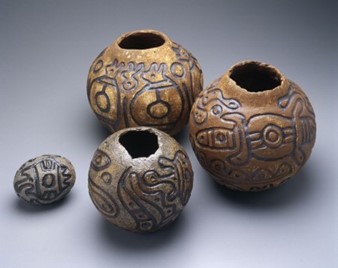
Thancoupie, Dr Gloria Fletcher AO was born in Weipa in 1937 and died after a long illness aged 74 in Weipa Base Hospital in 2011. Thancoupie had a traditional childhood with her family. The female elders taught her traditional stories and symbols that they drew in the sand. These symbols and stories were later depicted in her textiles and clay works. She is acknowledged as one of Australia’s leading indigenous ceramicists. She has also designed fabrics, murals, and terrazzo works for public institutions.
Travelling In Alcohol Restricted Areas | Alcohol Management Plan
An alcohol management plan does not exist in the Weipa township however, it does throughout the Cape York communities. The aim of alcohol restrictions and bans in Cape York Aboriginal communities is to reduce alcohol-related harm, especially to women, children and other vulnerable community members. Before you visit it is important you understand these restrictions as heavy fines may apply to breaches. For further information click HERE.
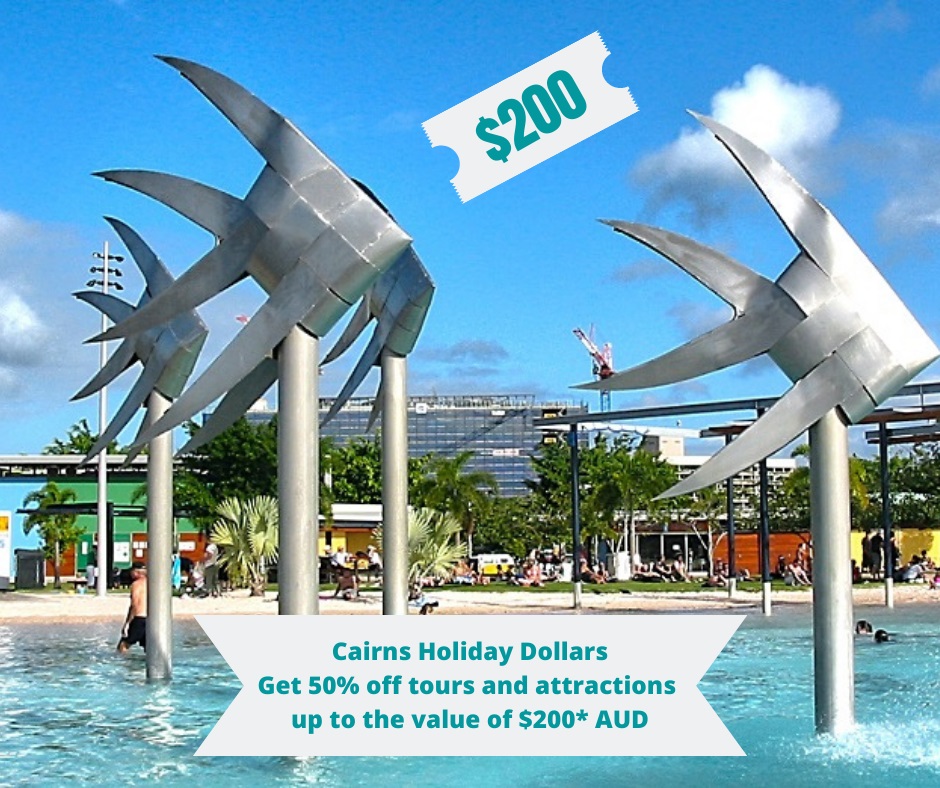
Cairns Holiday Dollars | Campaign Runs from 15 March to 25 June 2021
Queensland Government together with Tourism Tropical North Queensland (TTNQ) announced a major tourism campaign on 7 March 2021. The campaign is designed to encourage more Queenslanders to travel to Cairns and Great Barrier Reef to experience the diverse attractions and tours on offer with the help of some Cairns Holiday Dollars.
15,000 lucky Queensland residents will receive a $200.00 voucher to enjoy tourism experiences in Far North Queensland. Queensland residents must be aged over 18 to be eligible to enter the draw
to receive a $200.00 voucher. Vouchers can be used to claim 50% of any eligible tourism experience booked in Cairns or Great Barrier Reef up to a maximum of $200.00. The campaign will run from Monday 15 March to Friday 25 June 2021. Visit https://www.queensland.com/au/en/plan-your-holiday/holiday-deals to enter.
Disclosure: We use affiliate links to monetise our content. The Progressive Traveller may receive a commission on products or services that you purchase through clicking on links within this blog.