Plitvice Lakes National Park Visitor’s Guide
Plitvice Lakes National Park is one of those places that genuinely lives up to the hype. Before visiting, I’d seen countless photographs of its famous turquoise lakes and cascading waterfalls, but nothing prepared me for experiencing them in person. Walking along timber boardwalks with crystal-clear water beneath my feet, surrounded by lush forests and waterfalls around almost every corner, felt like stepping into another world.
As Croatia’s oldest and largest national park and a UNESCO World Heritage Site, Plitvice Lakes is one of the country’s most popular natural attractions. It’s easy to see why millions of people visit each year. However, a little planning can make the difference between a good day and an unforgettable one. Choosing the right entrance, selecting a walking route that suits your fitness level, booking timed-entry tickets in advance and arriving before the tour buses can transform your experience.
After spending a full day exploring the park, I’ve put together this practical visitor’s guide to help you make the most of your visit. Whether you’re wondering which entrance to use, where to stay, how much walking is involved or the best time to visit, you’ll find everything you need to plan a memorable day at one of Croatia’s most spectacular destinations. This guide is based on our own visit and includes the practical tips, lessons and small discoveries that helped make our day at Plitvice even more enjoyable.
Planning Your Visit
Best Time to Visit
The best time to visit Plitvice Lakes National Park depends on the experience you’re looking for. May, June and September offer an excellent balance of pleasant weather, powerful waterfalls and fewer crowds than the peak summer months.
July and August showcase the lakes at their most vibrant but are also the busiest months, with larger crowds and longer waits for boats and popular viewpoints. Autumn transforms the forests into stunning shades of gold and crimson, while winter offers a magical landscape of snow-covered boardwalks and frozen waterfalls.
We visited in late May and found it to be an ideal time. The waterfalls were flowing strongly, the surrounding forest was lush and green, and by arriving early we were able to enjoy many of the boardwalks before the tour groups arrived.
Choosing the Right Entrance
Plitvice Lakes National Park has two main entrances, each providing access to different areas of the park.
Entrance 1 is the best choice for most first-time visitors. It provides immediate access to the spectacular Lower Lakes and Veliki Slap, Croatia’s tallest waterfall, making it an ideal introduction to the park.
Entrance 2 provides easier access to the tranquil Upper Lakes and is better suited to visitors planning longer walking routes or returning to explore a different part of the park.
Before you travel, check the official Plitvice Lakes National Park website for the latest trail information, seasonal route changes and recommendations for the walking route that best suits your itinerary.
Accessibility
One of the great things about Plitvice Lakes National Park is that it offers walking routes suitable for a wide range of fitness and mobility levels. Whether you’re looking for a leisurely stroll or a full-day hike, there’s an option to suit most visitors.
Much of the park is explored via timber boardwalks and well-maintained paths, although some sections include steps and uneven terrain. Visitors with limited mobility should check the official park website before travelling for the latest information on accessible routes, facilities and parking. Accessible toilets are available throughout the park, and park staff can advise on the most suitable routes for your needs.
Arrive the Night Before if You Can
If your itinerary allows, I highly recommend arriving the day before your visit and staying close to the park, particularly near Entrance 1. It transforms Plitvice Lakes from a rushed day trip into a far more relaxed and memorable experience.
We stayed at Pansion Danica, just 700 metres from Entrance 1. After dinner, we took a leisurely walk to the entrance so we’d know exactly where to start the following morning. It meant there was no stress, no searching for parking and no uncertainty when we arrived early the next day.
Then one of the most magical moments of our Croatia trip unfolded.
As dusk settled over the surrounding forest, tiny lights began flickering among the trees. We were watching fireflies for the first time in our lives. It was one of those unexpected travel moments we’ll never forget.
Staying nearby also allowed us to be among the first visitors through Entrance 1 the following morning. Walking the boardwalks before the tour buses arrived was one of the highlights of our visit. The park felt peaceful, the waterfalls seemed even more spectacular and we had many of the viewpoints almost to ourselves.
An overnight stay also gives you the flexibility to visit early in the morning or later in the afternoon, when the park is generally quieter and the light is often better for photography.
If you’re deciding between a day trip and an overnight stay, I’d choose the overnight stay every time. It gives you the best chance to experience Plitvice Lakes at its most tranquil while creating memories that extend well beyond the park itself.
Accommodation Near Plitvice Lakes National Park
There are plenty of accommodation options within a few minutes of both park entrances, ranging from family-run guesthouses and B&Bs to hotels and self-contained apartments.
Staying within walking distance of Entrance 1 was one of the best decisions we made. It allowed us to avoid the morning rush, be among the first visitors inside the park and enjoy a much more peaceful start to the day.
Browse accommodation near Plitvice Lakes National Park on Booking.com to compare prices, read recent reviews and find a property that suits your travel style and budget.
Tickets, Parking and Walking Routes
Tickets
Plitvice Lakes National Park uses timed-entry tickets, with visitor numbers carefully managed throughout the day. If you’re visiting between May and September, I strongly recommend booking your tickets online well in advance, particularly if you want an early morning entry time. These are often the first to sell out.
Your entrance ticket includes access to the park, unlimited use of the panoramic shuttle buses and the electric boats that connect the Upper and Lower Lakes.
Ticket prices vary throughout the year, with significantly lower prices during winter. Before travelling, check the official Plitvice Lakes National Park website for the latest admission prices, opening hours, trail information and seasonal updates.
Purchase tickets only through the official park website or reputable travel providers. Avoid buying tickets from unofficial sellers or social media offers, particularly if they’re advertised at unusually low prices.
Parking
Designated paid parking is available at both Entrance 1 and Entrance 2. During the busy summer months, the car parks can fill quickly, so arriving early is recommended.
If you’re staying nearby, many hotels and guesthouses offer complimentary parking, making an overnight stay an even more convenient option.
Walking Routes
Plitvice Lakes National Park offers a choice of well-marked walking routes, allowing you to tailor your visit to your available time and fitness level. The trails combine scenic boardwalks, forest paths, panoramic viewpoints, electric boat crossings and shuttle buses, making it easy to experience different parts of the park.
Route A (3–4 hours)
Ideal if you’re short on time and want to experience many of the highlights of the Lower Lakes.
Route B (3–4 hours)
Perfect for visitors wanting to explore the peaceful Upper Lakes and enjoy a slightly quieter experience.
Route C (4–6 hours) – My Recommendation
The best choice for most first-time visitors. This route showcases many of Plitvice’s most spectacular lakes, waterfalls and viewpoints, making it an excellent introduction to the park.
Route K (6–8 hours)
A full-day hike covering much of the park, best suited to confident walkers with plenty of time.
Whichever route you choose, stay on the marked paths to protect this fragile UNESCO World Heritage Site and allow extra time for photography—you’ll almost certainly stop more often than you expect. Walking times are approximate and can vary depending on the season, visitor numbers and your pace, so always check the official park website for the latest trail information before setting off.
Shuttle Buses and Electric Boats
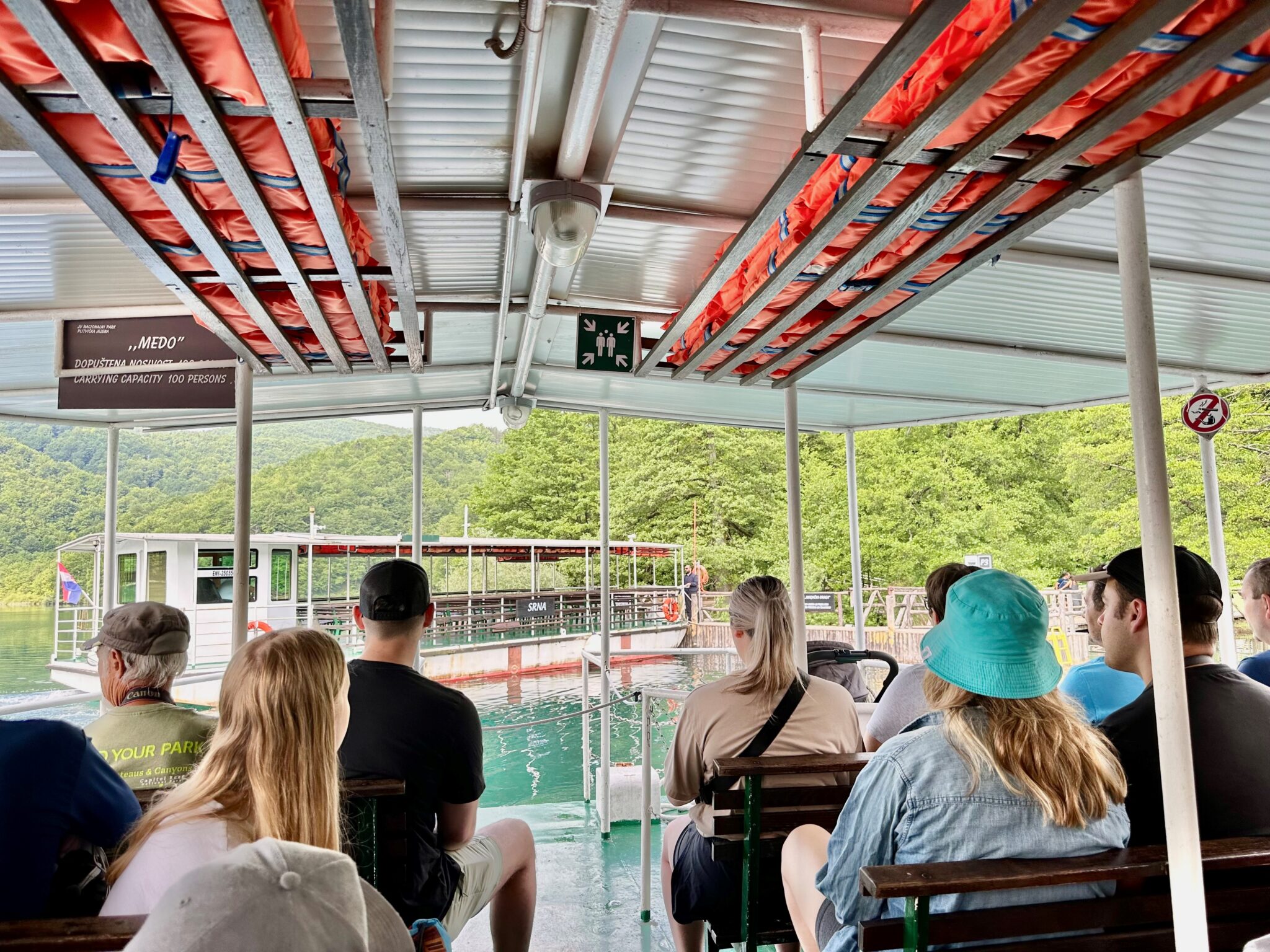
Plitvice Lakes National Park is much larger than many first-time visitors expect, so don’t worry—you won’t be walking the entire park. The panoramic shuttle buses and quiet electric boats are included in your entrance ticket and make it easy to explore different sections of the park.
The shuttle buses connect Entrance 1 and Entrance 2, allowing you to return to your starting point or combine different walking routes. The electric boats cross Kozjak Lake, linking the Upper and Lower Lakes while giving your legs a welcome break and offering a completely different perspective of the park.
During the busy summer months, queues for the boats can become quite long around the middle of the day. Starting your visit early not only helps you avoid the largest crowds but usually means shorter waiting times for both transport services.
The Lakes and Waterfalls
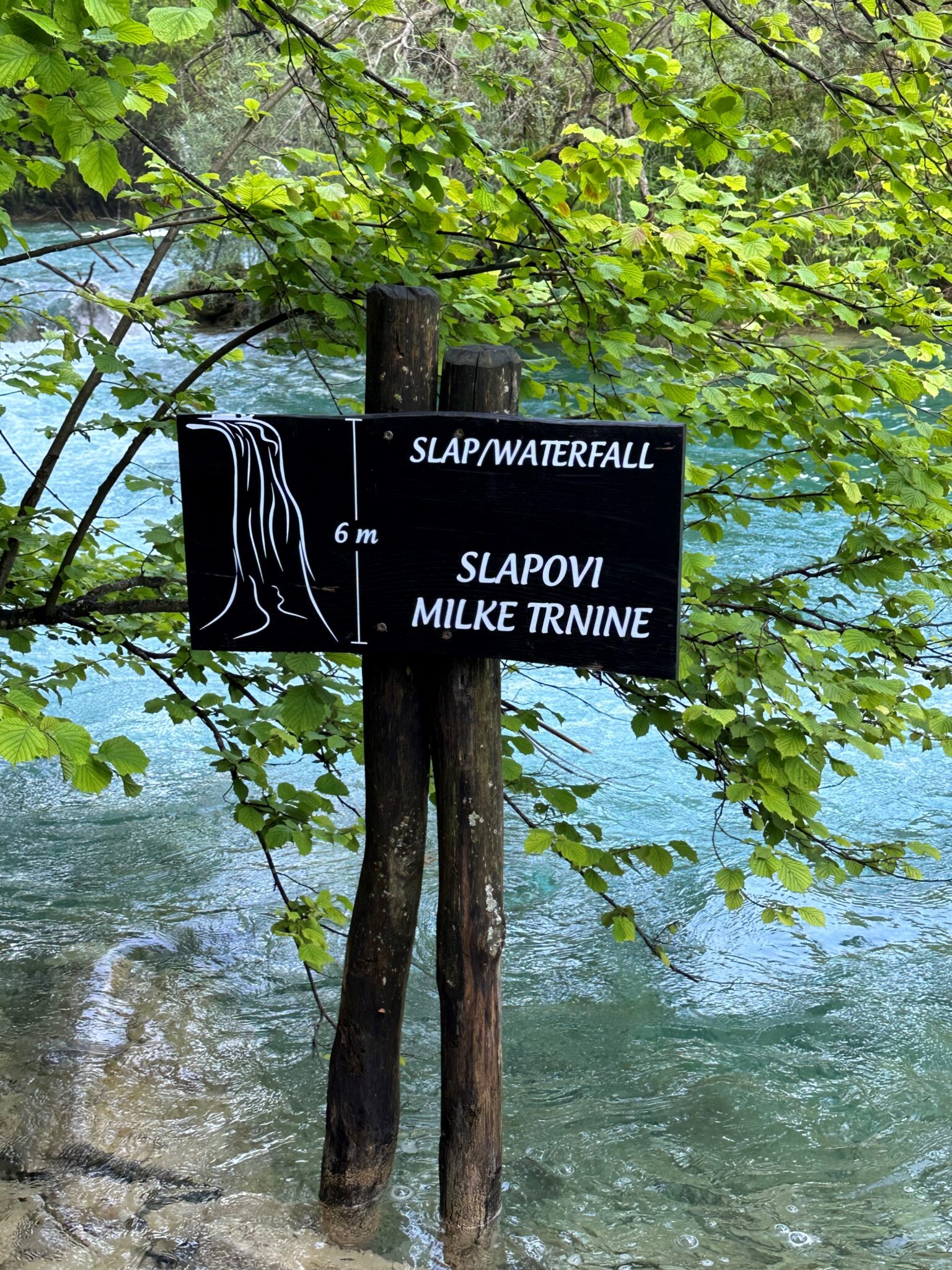
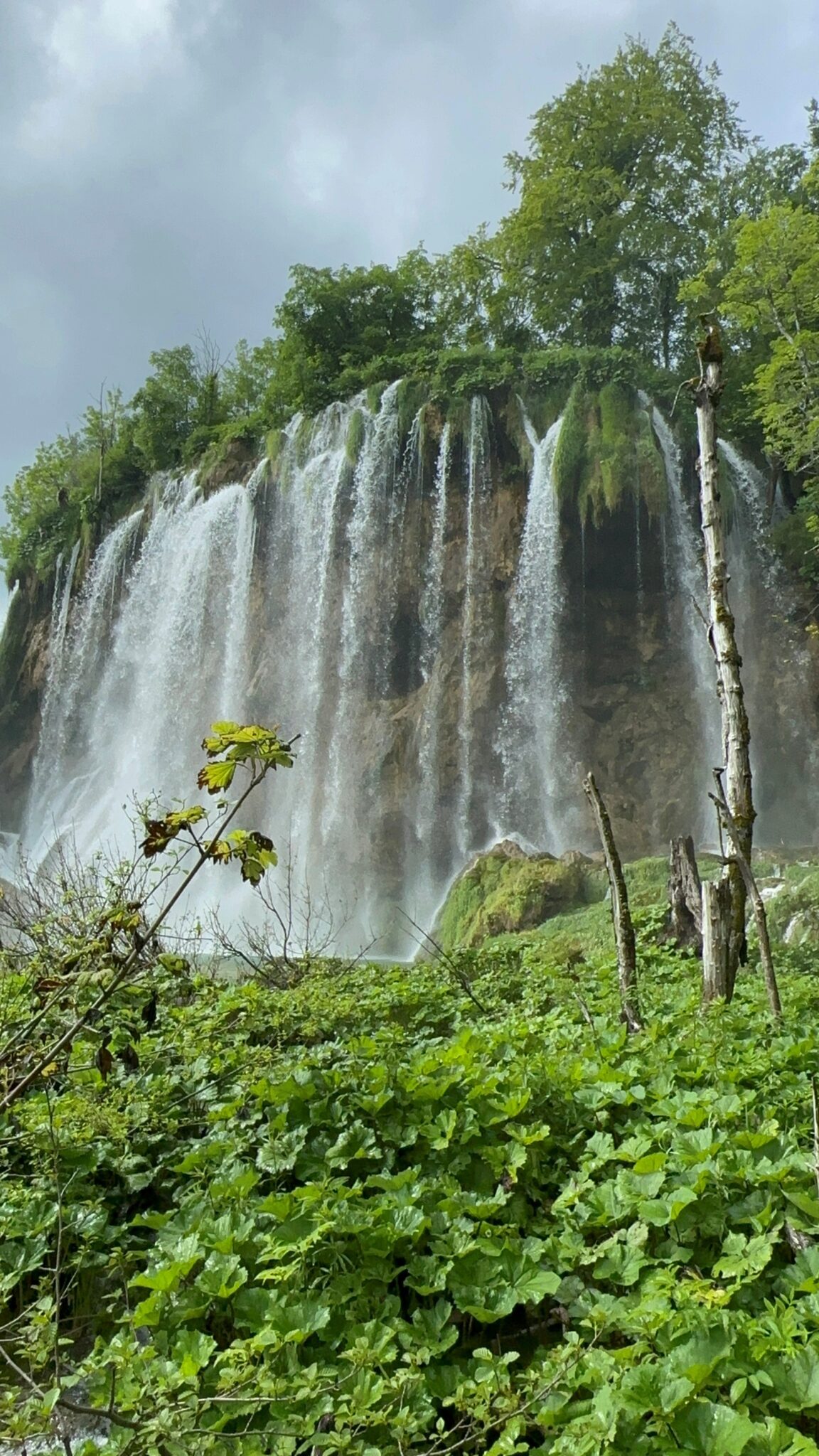
The lakes and waterfalls are, without doubt, the stars of Plitvice Lakes National Park. As you wander along the timber boardwalks, you’ll discover 16 interconnected lakes, countless waterfalls and crystal-clear water in ever-changing shades of turquoise, emerald and deep blue.
The park is divided into the Lower Lakes and Upper Lakes, with each offering a distinctly different experience. The Lower Lakes feature dramatic limestone cliffs, narrow canyons and Veliki Slap, Croatia’s tallest waterfall. The Upper Lakes have a gentler, more tranquil feel, with peaceful forest trails, wider lakes and a series of smaller waterfalls flowing between them.
What surprised me most was how dramatically the scenery changed as we explored. No two sections looked the same. One moment we were standing beside a powerful waterfall, the next we were crossing a timber boardwalk suspended above impossibly clear water or walking through a quiet forest surrounded by birdsong.
While Veliki Slap is the park’s most famous waterfall, I found it was the countless smaller cascades, hidden corners and constantly changing colours of the lakes that made Plitvice such an unforgettable place to explore.
My advice? Don’t rush from viewpoint to viewpoint. Slow down, pause on the boardwalks, look into the water and simply enjoy the experience. Some of the park’s most memorable moments aren’t the famous landmarks—they’re the unexpected scenes you discover along the way.
Food, Facilities and Visitor Tips
Food and Drink
There are several cafés and restaurants within Plitvice Lakes National Park, serving everything from coffee and light snacks to traditional Croatian dishes. They’re convenient, but can become very busy during the middle of the day, particularly during the peak summer season.
If you’re planning one of the longer walking routes, I recommend bringing a refillable water bottle and a few snacks. There are also designated picnic areas if you’d prefer to enjoy your own lunch surrounded by nature.
Restroom Facilities
Clean toilet facilities are located throughout the park, including near the entrances, restaurants and other key visitor areas. Accessible toilets are also available.
What to Wear
Comfortable walking shoes with good grip are essential, as you’ll spend several hours on timber boardwalks, gravel paths and forest trails. Dress in layers and pack a hat, sunscreen and a lightweight rain jacket, as the weather can change quickly, even during summer.
Be a Considerate Visitor
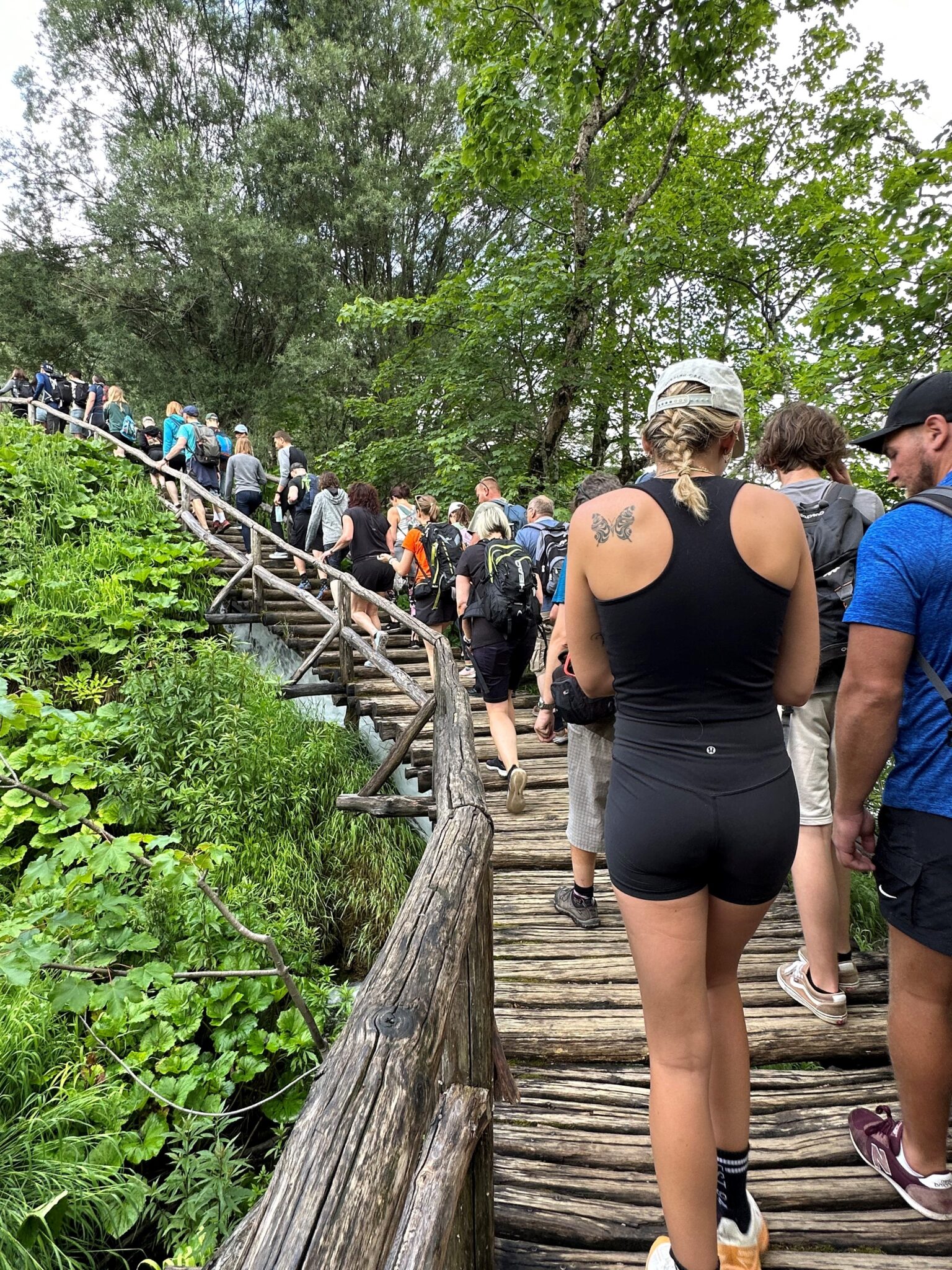
Plitvice Lakes National Park is one of Croatia’s busiest attractions, and the narrow timber boardwalks are shared by thousands of visitors every day.
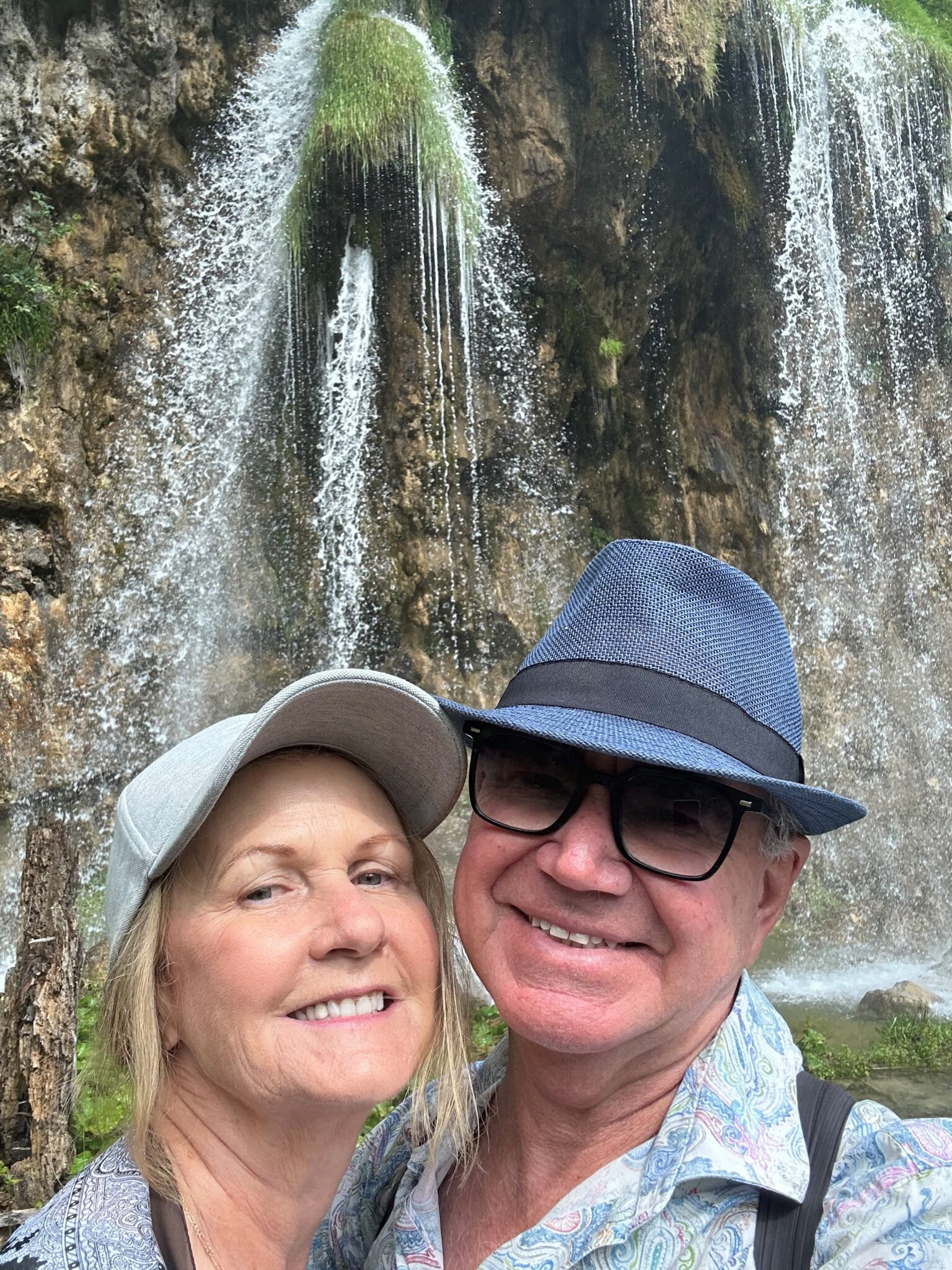
One thing I noticed was that some visitors stopped in the middle of the boardwalks and stairways for selfies or extended photo sessions, creating long queues behind them. By all means capture the memories, but if you’re stopping for photos, simply step to the side and let others pass. If you enjoy taking selfies, a selfie stick can help you capture the perfect shot quickly without holding up the flow of visitors.
Please stay on the marked paths, never climb over barriers for a better photograph, respect the park’s wildlife and take all rubbish with you. Remember, there are no second chances to protect places like this. Small acts of courtesy help preserve this extraordinary UNESCO World Heritage Site and make the experience more enjoyable for everyone.
Photography Tips
You’ll probably take far more photos than you expect! The constantly changing colours of the lakes, waterfalls and surrounding forests make Plitvice Lakes National Park one of Croatia’s most photogenic destinations.
For the best photographs, arrive early in the morning when the light is softer, the waterfalls are beautifully illuminated and the boardwalks are much quieter. You’ll not only capture better images but also enjoy a far more peaceful experience.
Before setting off, make sure your phone or camera is fully charged. Between the stunning scenery and constantly changing viewpoints, you’ll almost certainly take more photos than you expected.
8 Fascinating Facts About Plitvice Lakes National Park
Even after spending a full day exploring Plitvice Lakes National Park, I discovered there was far more to this remarkable place than its famous waterfalls. Here are eight fascinating facts that make it even more extraordinary.
1. Croatia’s oldest and largest national park
Established in 1949, Plitvice Lakes National Park was Croatia’s first national park and remains its largest, protecting almost 300 square kilometres of forests, lakes and waterfalls.
2. The landscape is still being created
Unlike many national parks, Plitvice is constantly evolving. Travertine barriers, formed by mineral-rich water, moss and algae, continue to grow naturally, creating new cascades and subtly reshaping the lakes over time.
3. The lakes really do change colour
The lakes aren’t always the same shade. Depending on the sunlight, water depth and mineral content, they can appear emerald green, brilliant turquoise or deep sapphire blue—one of the reasons no two visits are ever quite the same.
4. Wildlife is all around you
Although most visitors never see them, the park is home to brown bears, wolves, lynx, otters, deer and more than 160 species of birds. Simply knowing they share these forests makes the experience feel even wilder.
5. Every season offers a different experience
Spring brings powerful waterfalls, summer showcases brilliant turquoise lakes, autumn transforms the forests into rich shades of gold and crimson, while winter blankets the waterfalls and boardwalks in snow and ice.
6. The boardwalks are designed to protect the park
The iconic timber boardwalks don’t just provide spectacular views—they also help protect the fragile lakes and travertine formations by keeping millions of visitors on carefully managed pathways.
7. Fireflies can light up the forest
If you stay near the park during late spring or summer, you may be lucky enough to see fireflies dancing through the surrounding forests after dark. We experienced this during an evening walk from Pansion Danica to Entrance 1. It was one of the most magical moments of our Croatia trip.
8. It’s even more beautiful than the photographs
I’d seen countless images of Plitvice Lakes before arriving and wondered whether reality could possibly live up to the hype. It did. If anything, the colours, waterfalls and peaceful atmosphere were even more spectacular in person than any photograph could capture.
Continue Your Croatian Adventure
Plitvice Lakes National Park is undoubtedly one of Croatia’s greatest natural wonders, but it’s only one part of what makes this country such an unforgettable destination.
During our travels through Croatia, we discovered that every region offers something completely different. From medieval walled cities and idyllic islands to vibrant capitals and spectacular national parks, Croatia rewards travellers who slow down, venture beyond the obvious and allow time to truly experience each destination.
Every guide below is based on our own travels, with practical advice, personal recommendations and the lessons we learnt along the way.
Explore More of Croatia
Continue your Croatian journey with these detailed travel guides:
- Dubrovnik Travel Guide – Plan your visit to Croatia’s iconic walled city, including where to stay, the best things to do and practical visitor tips.
- Korčula Island Guide – Discover one of Croatia’s most beautiful islands, renowned for its medieval Old Town, excellent wineries and relaxed Adriatic lifestyle.
- Zadar Travel Guide – Experience Roman history, the unique Sea Organ, spectacular sunsets and one of Croatia’s most liveable coastal cities.
- Zagreb Travel Guide – Explore Croatia’s vibrant capital, from its historic Upper Town and lively markets to fascinating museums and café culture.
- Krka National Park Guide – Discover another of Croatia’s spectacular national parks, famous for its waterfalls, walking trails and scenic boat excursions.
Continue Exploring the Balkans
Croatia also makes the perfect starting point for exploring the wider Balkans. We continued our journey through Montenegro and Albania, and both quickly became highlights of our trip. If you have the time, I highly recommend extending your travels beyond Croatia’s borders.
You may also enjoy:
- Kotor & Bay of Kotor Guide – Explore one of Europe’s most spectacular bays, medieval towns and picturesque waterfront villages.
- Montenegro Road Trip Guide – Discover dramatic mountains, historic towns and one of the Adriatic’s most scenic coastlines.
- Albania Travel Guide – Explore UNESCO-listed towns, pristine beaches, fascinating history and the warm hospitality that made Albania one of the biggest surprises of our Balkan journey.
I hope this guide helps you plan an unforgettable visit to Plitvice Lakes National Park and inspires you to explore more of Croatia—and perhaps even venture a little further into the beautiful Balkans.
If you do visit Plitvice, I’d love to hear about your experience. Safe travels and enjoy every moment of your adventure.
Donna
Progressive Traveller