Why I Keep Coming Back to Rome
Rome isn’t a city I’ve visited once and ticked off a bucket list. It’s a city I’ve returned to five times over the past twenty years, and every visit has felt a little different.
Some cities change dramatically over time. Rome, surprisingly, hasn’t. The ancient monuments are exactly where you left them, the narrow laneways still lead to hidden piazzas, and locals continue living amongst some of the world’s greatest archaeological treasures as though they’re simply part of everyday life.
What has changed is tourism. More visitors arrive every year, accommodation is considerably more expensive than it once was, and several attractions that were once free now require paid tickets or timed entry. Even places like the Pantheon and access around the Trevi Fountain are more regulated than I remember.
Showing Rome to a First-Time Visitor
This visit was especially enjoyable because I was travelling with my lifelong friend Arlie, who was experiencing Rome for the very first time. Instead of constantly checking maps or wondering what to see next, I found myself doing something I genuinely love – playing tour guide.
After five visits, I could effortlessly lead us through Rome’s neighbourhoods, point out shortcuts, recommend cafés I’d enjoyed before and explain little details that many first-time visitors walk straight past.
If you’re planning your first visit, this guide will help you experience Rome’s famous sights while also understanding why it’s one of those cities that becomes even better the second or third time you return.
What You’ll Find in This Guide
If this is your first visit to Rome, there are some experiences you simply can’t miss. Seeing the Colosseum, standing beneath the dome of the Pantheon, tossing a coin into the Trevi Fountain and wandering through Piazza Navona are all part of discovering why Rome is one of the world’s great cities.
But Rome is much more than its famous landmarks. Throughout this guide, I’ll share practical advice from five visits over the past 20 years, including where to stay, how to get around, neighbourhoods worth exploring and the little lessons I’ve learned that can make your first visit easier and more enjoyable.
My hope is that, like me, your first trip to Rome won’t be your last.

Where to Stay in Rome
One of the questions I’m asked most often is, “Where should I stay in Rome?” After multiple visits over the past 20 years, I’ve stayed in several of Rome’s most popular neighbourhoods. Each has its own personality, so the best choice depends on your travel style and priorities.
Monti – My Top Recommendation for First-Time Visitors
This is where Arlie and I stayed on our most recent visit, and if you’re travelling to Rome for the first time, it’s my top recommendation.
Monti has a relaxed village atmosphere despite being only a short walk from the Colosseum. Its streets are lined with cafés, wine bars, restaurants and boutique shops, yet it feels less hectic than many of Rome’s busiest tourist areas. It’s also well connected to Roma Termini and the Metro.
We stayed at Boschetto 21, a spacious two-bedroom, one-bathroom apartment on Via del Boschetto. It had a lift, washing machine and a well-equipped kitchen – although, if I’m honest, we mostly used it to make cups of tea!
Centro Storico (Piazza Navona & Campo de’ Fiori)
If your priority is being within walking distance of Rome’s most famous attractions, this area is hard to beat.
When I visited Rome with my 89-year-old mother, I chose accommodation near Piazza Navona so we could explore at a relaxed pace without relying on public transport. It proved to be the perfect location. Despite her age, Mum happily walked between 12,000 and 15,000 steps each day, stopping for coffee, lunch, gelato, beer and plenty of sightseeing along the way.
You’ll be within easy walking distance of the Pantheon, Trevi Fountain, Piazza Navona, Campo de’ Fiori and countless cafés and restaurants.
Trastevere
Trastevere is one of my favourite neighbourhoods for its atmosphere. By day it’s charming, but it really comes alive in the evening when the piazzas fill with locals and visitors enjoying long dinners, wine and gelato.
If experiencing Rome’s food scene and nightlife is high on your list, Trastevere is an excellent choice.
Testaccio
Testaccio offers a more authentic side of Rome. It’s known for its traditional Roman cuisine, local markets and residential feel, making it ideal for travellers who have already visited Rome or prefer experiencing the city beyond the main tourist areas.
Repubblica
If you’re arriving or departing by train, Repubblica is an excellent option. Located between Roma Termini and the historic centre, it provides easy access to the station while still being within walking distance of many attractions.
It’s also close to Via Veneto and Villa Borghese, making it a good choice if you enjoy elegant hotels, wide boulevards and beautiful gardens. I particularly like Repubblica for shorter stays or when catching an early train, as you avoid the stress of travelling across the city with luggage.
Ludovisi & Via Veneto
Bordering Villa Borghese, Ludovisi is one of Rome’s more elegant neighbourhoods. It’s quieter than the historic centre and home to grand hotels, embassies and the famous Via Veneto.
If you’re looking for a more refined atmosphere while still being within walking distance of the Spanish Steps and Villa Borghese, this is a lovely area to stay.
Progressive Traveller Tip: Don’t choose your accommodation based solely on price. Rome is a city best explored on foot, so staying in a neighbourhood you’ll enjoy returning to each afternoon and evening can make your experience far more enjoyable than saving a few dollars on accommodation further from the centre.

Getting to Rome
Rome is one of Europe’s easiest cities to reach. Whether you’re arriving by train, flying into one of its airports or driving through Italy, getting to the Eternal City is relatively straightforward.
For this trip, Arlie and I travelled from Venice to Rome by high-speed train, one of my favourite ways to travel around Italy. The journey took around four hours, so we pre-booked first-class tickets several months in advance. The extra comfort, additional legroom and quieter carriage made the journey far more enjoyable and, in my opinion, well worth the additional cost for a longer trip.
The train arrived at Roma Termini, right in the heart of the city.
Our apartment in Monti was only about a 15-minute walk from the station. On paper, that sounds easy, but Rome’s cobblestone streets can make pulling a suitcase more tiring than you might expect. Personally, I’d happily make the walk again, but if you’re travelling with heavy luggage or have mobility concerns, a short taxi ride is a sensible alternative.
If you’re travelling between Italy’s major cities, I’d choose the train over flying every time. High-speed rail connects Venice, Florence, Rome, Naples and Milan efficiently, taking you directly from city centre to city centre without airport transfers, lengthy security queues or baggage collection. For me, it’s one of the great pleasures of travelling through Italy.
Flying to Rome
If you’re arriving from overseas, you’ll most likely land at Leonardo da Vinci–Fiumicino Airport (FCO), around 30 kilometres southwest of the city centre. It’s Italy’s busiest international airport and offers several transport options into Rome, including the Leonardo Express, taxis and private transfers.
The Leonardo Express is the easiest way to reach the city if you’re staying near Roma Termini or plan to connect with another train. The non-stop service departs every 15–30 minutes and takes approximately 32 minutes to Roma Termini. From there, you can walk, catch the Metro or take a taxi to your accommodation.
If you’re staying further from the station or travelling with several suitcases, a taxi or pre-booked private transfer may be the more convenient option, particularly after a long international flight.
Rome’s second airport, Ciampino Airport (CIA), is used mainly by low-cost European airlines flying within Europe. There is no direct train from Ciampino Airport into central Rome, so most travellers take an airport bus or shuttle to Roma Termini, or a taxi if carrying luggage.
💡 Progressive Traveller Tip: If you’re planning to travel onwards by train to cities such as Florence, Venice or Naples, consider arriving in Rome via Fiumicino Airport. The Leonardo Express takes you directly to Roma Termini, making onward rail connections quick and straightforward.
Getting Around Rome
Rome is a city best explored on foot. Many of the major attractions are within walking distance of each other, and wandering between them is often one of the highlights of visiting Rome. During our stay, Arlie and I averaged 15,000 to 20,000 steps a day, so comfortable walking shoes and a hat are essential.
Before leaving Australia, I recommend downloading a few apps and setting up your preferred payment method. It will save you time and frustration once you arrive.
Apps I Recommend
- Apple Maps or Google Maps – Essential for walking directions, public transport and saving your accommodation.
- Uber – Reliable and convenient for booking rides throughout Rome.
- Free Now – An excellent app for booking Rome’s licensed taxis.
- Trenitalia and Italo – Useful for checking train times, platforms and tickets if you’re travelling between Italian cities.
Taxis and Uber
Rome’s official taxis are white and display the “Comune di Roma” licence on the doors. You can catch them from designated taxi ranks or book one through the Free Now app. Uber is also widely available and we found both Uber and taxis easy to book on demand throughout our stay.
If you need to be somewhere at a specific time – such as catching a train, flight or joining a guided tour – I’d recommend pre-booking your taxi or Uber for extra peace of mind.
One thing we quickly learned is that your driver may not always collect you directly outside your accommodation. Because many of Rome’s streets are narrow, pedestrian-only or affected by traffic restrictions, both taxi and Uber drivers may ask you to meet them at a nearby corner, piazza or main road. Allow a few extra minutes if you’re unfamiliar with the area.
Although most drivers speak some English, I found it helpful to save our accommodation address in both the Notes app and Google Maps on my phone. If there was ever any confusion, I could simply show the driver the address instead of trying to pronounce an unfamiliar Italian street name.
💡 Progressive Traveller Tip: Before leaving home, download Google Maps, Uber, Free Now, Trenitalia and Italo, and set up your payment method in each app. It’s one less thing to worry about after a long flight, and you’ll be ready to book transport or check train times as soon as you arrive.

Must-Do Attractions in Rome
If it’s your first visit to Rome, there are a handful of attractions I believe you simply shouldn’t miss. They’re famous for a reason and, together, tell the story of Ancient Rome, the Renaissance and the world’s smallest independent state, Vatican City.
Rather than trying to see everything, ask yourself a simple question: What images come to mind when you think of Rome? For most people, it’s the Colosseum, the Trevi Fountain, the Pantheon, St Peter’s Basilica or the Vatican Museums. Make those your priorities and build the rest of your itinerary around them.
My advice is not to rush from one landmark to the next. Allow time to wander the streets between attractions, stop for a coffee or gelato, and simply soak up the atmosphere. Some of my favourite memories of Rome haven’t happened at the famous landmarks themselves, but while getting lost in the surrounding streets and neighbourhoods.

The Colosseum, Roman Forum & Palatine Hill
If you’re only going to book one guided tour in Rome, make it this one.
The Colosseum is Rome’s most recognisable landmark, but it’s the Roman Forum and Palatine Hill that truly bring Ancient Rome to life. Walking through the Forum, where emperors, senators and citizens once gathered, gives you a far greater appreciation of Roman history than visiting the Colosseum alone.
- Why visit? Experience the heart of the Roman Empire and discover where gladiators fought, emperors ruled and Roman civilisation flourished.
- Allow: 3–4 hours.
- Best time: As soon as it opens or later in the afternoon.
- Book ahead? Yes. Tickets often sell out weeks in advance.
- Guided tour? Highly recommended. A knowledgeable guide transforms a collection of ruins into one of the most fascinating experiences in Rome.
💡 Progressive Traveller Tip: Book a combined ticket that includes the Colosseum, Roman Forum and Palatine Hill. If available, include the Colosseum Underground Tour. Seeing the underground chambers where gladiators prepared before entering the arena adds a whole new dimension to the experience and is one of the few attractions in Rome where I’d happily pay extra for the guided tour.
Vatican Museums & St Peter’s Basilica
Whether you’re religious or not, Vatican City is an extraordinary place to visit. The Vatican Museums contain one of the world’s greatest art collections, culminating in Michelangelo’s breathtaking Sistine Chapel ceiling, while St Peter’s Basilica is one of the largest and most magnificent churches ever built.
- Why visit? Experience world-famous art, architecture and one of Christianity’s most significant sites.
- Allow: Half to a full day.
- Best time: Early morning.
- Book ahead? Absolutely. Tickets regularly sell out.
- Guided tour? Highly recommended. The museums are enormous, and a guide helps you appreciate the highlights while navigating efficiently through the crowds.
💡 Progressive Traveller Tip: If you’re planning to visit both the Vatican Museums and St Peter’s Basilica, allow at least half a day. Before booking, check the Vatican calendar for papal Masses, audiences and major religious events. During our visit, the Pope was celebrating Mass, which meant St Peter’s Basilica was closed to visitors. Unfortunately, Arlie missed seeing the Basilica and Michelangelo’s famouse Pietà statue because we hadn’t realised it would be inaccessible that day. Had we known in advance, we would have booked our Vatican tour for a different day.
The Pantheon
Nearly 2,000 years after it was built, the Pantheon remains one of the greatest architectural achievements of the ancient world. Its enormous concrete dome and central oculus continue to amaze visitors today.
- Why visit? See one of the best-preserved buildings from Ancient Rome.
- Allow: 30–60 minutes.
- Best time: Early morning or later in the afternoon.
- Book ahead? Recommended, particularly during busy periods.
- Guided tour? Optional. An audio guide is usually sufficient if you’d like to learn more about its history.
💡 Progressive Traveller Tip: Look up as soon as you walk inside. The famous oculus is the architectural masterpiece that has inspired generations of architects.
Trevi Fountain
No first visit to Rome feels complete without seeing the Trevi Fountain. Yes, it’s busy, but standing in front of one of the world’s most famous fountains is still a memorable experience.
- Why visit? Experience one of Rome’s most iconic landmarks and toss a coin into the fountain to ensure your return to Rome.
- Allow: 20–30 minutes.
- Best time: Before 8.00 am or after 9.00 pm.
- Book ahead? No.
- Guided tour? Not necessary.
💡 Progressive Traveller Tip: Visit early in the morning for the best photos and fewer crowds. While you’re there, consider visiting the nearby Vicus Caprarius – the City of Water, an underground archaeological site that reveals the ancient Roman structures and aqueduct beneath the Trevi Fountain. It’s well worth the small admission fee.

Piazza Navona
Built on the site of an ancient Roman stadium, Piazza Navona is one of Rome’s most elegant public squares. Surrounded by cafés, restaurants and Baroque architecture, it’s the perfect place to slow down and simply enjoy being in Rome.
- Why visit? Admire Bernini’s magnificent Fountain of the Four Rivers and soak up the atmosphere.
- Allow: 30–60 minutes.
- Best time: Morning or evening.
- Book ahead? No.
- Guided tour? Not necessary.
💡 Progressive Traveller Tip: Rome rewards curious travellers. Before visiting Piazza Navona, spend a few minutes reading about Bernini’s Fountain of the Four Rivers and the other fountains you’ll encounter throughout the city. Once you understand the stories and symbolism behind them, you’ll never look at Rome’s fountains the same way again. Then order a coffee or aperitivo, sit back and simply enjoy watching Roman life unfold around you.
Spanish Steps
The Spanish Steps have welcomed visitors for centuries and remain one of Rome’s best-known landmarks. While you won’t need long here, they’re well worth including as part of a walk through the surrounding streets.
- Why visit? Enjoy one of Rome’s most famous meeting places and explore the elegant shopping streets nearby.
- Allow: 20–30 minutes.
- Best time: Early morning or evening.
- Book ahead? No.
- Guided tour? Not necessary.
💡 Progressive Traveller Tip: Combine your visit to the Spanish Steps with Piazza del Popolo, Villa Borghese and Rome’s premier shopping precinct. Via dei Condotti, Via del Corso and the surrounding streets are home to luxury boutiques, well-known international brands and charming cafés. It’s an easy way to combine sightseeing, shopping and a relaxing stroll through one of Rome’s most elegant neighbourhoods.
Experience a Different Side of Rome
Once you’ve seen Rome’s iconic attractions, it’s time to discover the experiences many first-time visitors miss. These are the tours, neighbourhoods and hidden gems that have become some of my favourite memories over five visits.
If you’ve allowed yourself three days in Rome, don’t spend every minute ticking off famous landmarks. Use some of that time to explore beyond the tourist trail. In my experience, these are often the experiences you’ll remember long after you’ve returned home.
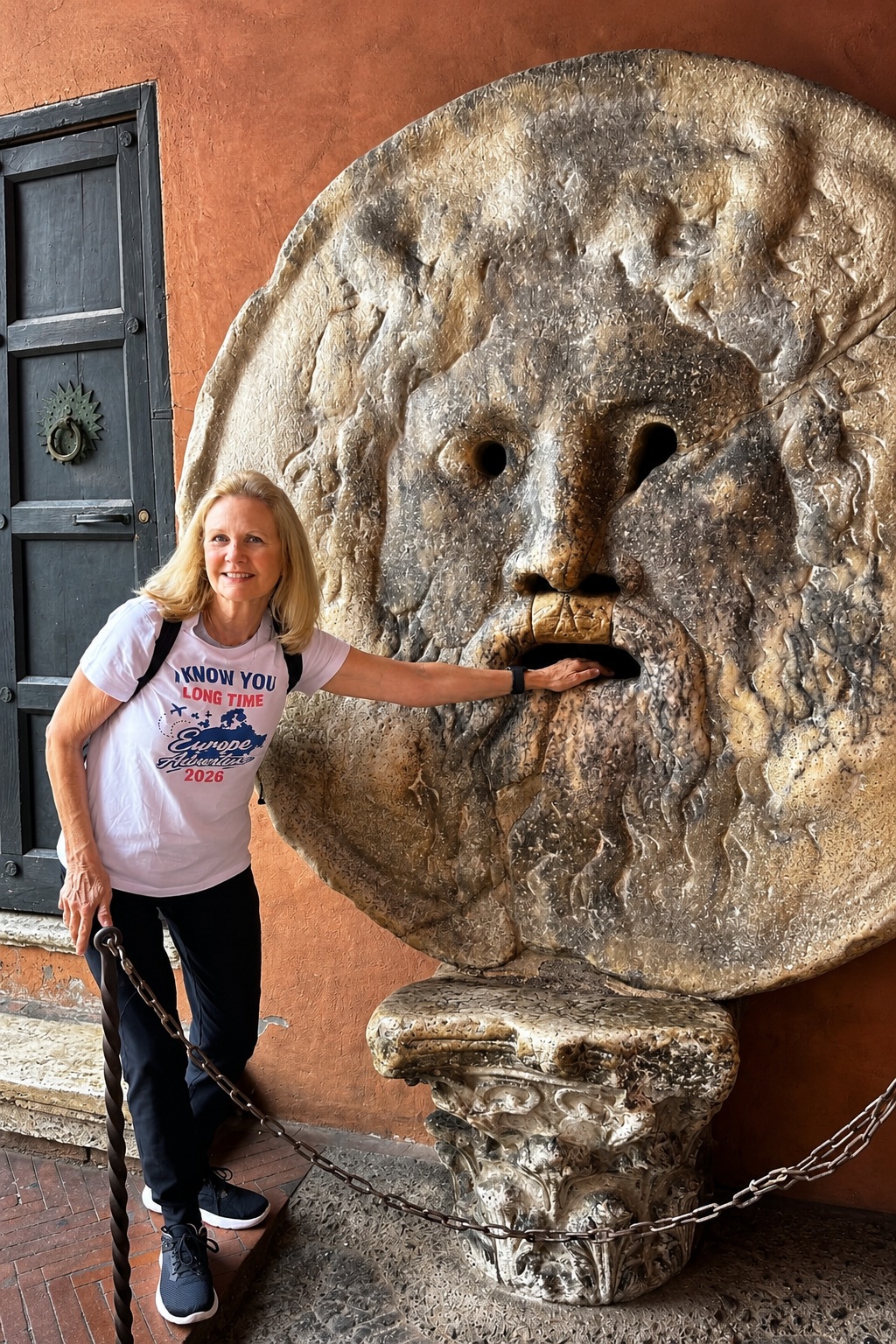
Mouth of Truth
Made famous by Roman Holiday, the Mouth of Truth is one of Rome’s most enduring legends.
- Why do it? It’s a fun photo opportunity and easy to combine with several nearby attractions.
- Allow: 20–30 minutes.
- Best time: Early morning or late afternoon.
- Guided tour? No.
- Cost: Free
💡 Progressive Traveller Tip: Combine your visit with Circus Maximus, the Orange Garden and the Knights of Malta Keyhole for one of Rome’s most enjoyable walks.
Tour the Rome Opera House
Even if you’ve never been to an opera, a guided tour of the Teatro dell’Opera di Roma is well worth considering. Opened in 1880, it’s one of Italy’s premier opera houses and offers a fascinating glimpse behind the scenes of one of Rome’s cultural treasures. The tour includes the elegant foyer, auditorium, Royal Box, gallery and museum, while sharing stories about the famous performers who have graced its stage.
- Why do it? Discover one of Italy’s great theatres and learn about its architecture, history and backstage secrets.
- Allow: Around 1 hour.
- Best time: Tours operate regularly throughout the week, but check the schedule before your visit as times can vary and may change around performances.
- Guided tour? Yes.
💡 Progressive Traveller Tip: The theatre is located on Piazza Beniamino Gigli, just a 5-minute walk from Roma Termini and beside Piazza della Repubblica, making it easy to combine with a stay in the Repubblica or Monti neighbourhoods. If your dates coincide with a performance, consider pre-booking an opera or ballet instead of just taking the tour – it’s an unforgettable cultural experience.
Jewish Ghetto Walking Tour & Jewish Museum
One of the oldest Jewish communities in the world has called Rome home for more than 2,000 years. A guided walking tour reveals a fascinating side of the city that many visitors know very little about.
- Why do it? To understand an important chapter of Rome’s history and culture that you simply won’t appreciate by wandering through the neighbourhood on your own.
- Allow: 2–3 hours.
- Best time: Morning or late afternoon.
- Guided tour? Absolutely. This is one experience where a local guide makes all the difference.
💡 Progressive Traveller Tip: I’ve taken this tour twice and loved it both times. Combine the walking tour with a visit to the Jewish Museum and lunch in the Jewish Quarter. It’s one of Rome’s most fascinating and underrated neighbourhoods, and the local guide’s stories add so much more meaning to what you’re seeing.

Trastevere Food Tour
Rome is famous for its food, but finding the best local restaurants isn’t always easy. A guided food tour through Trastevere is one of my favourite experiences in Rome, and I’ve done it several times.
- Why do it? Experience Rome through its food while discovering family-run cafés, bakeries, delicatessens and restaurants that many tourists would never find on their own. As you walk from one venue to the next, your local guide explains the history of the neighbourhood, introduces you to traditional Roman dishes and shares stories that bring the city’s food culture to life.
- Allow: 3–4 hours.
- Best time: Evening.
- Guided tour? Highly recommended. The local knowledge and stories are just as valuable as the food itself.
💡 Progressive Traveller Tip: Book your food tour early in your stay. Not only will you enjoy an unforgettable introduction to Roman cuisine, but you’ll also discover cafés, restaurants and local specialities you’ll want to revisit during the rest of your time in Rome.
Enjoy an Aperitivo Like a Local in Trastevere
One of my favourite memories from every visit to Italy is slowing down for an aperitivo before dinner. It’s more than just a pre-dinner drink—it’s a chance to relax, catch up with friends and soak up the atmosphere before the evening meal.
- Why do it? Experience everyday Roman life rather than simply sightseeing. Trastevere comes alive in the early evening, with locals spilling out into the piazzas and narrow laneways to enjoy a drink with friends before dinner.
- Allow: 1–2 hours.
- Best time: Around 5.30–7.30 pm.
- Guided tour? No.
- Where I’d recommend: Freni e Frizioni, one of Rome’s most popular aperitivo bars, or simply wander through Trastevere and choose a busy bar filled with locals.
💡 Progressive Traveller Tip: Don’t feel you have to visit the most famous bar. One of the joys of Trastevere is wandering its cobbled streets until you find a lively piazza or wine bar that appeals to you. The best aperitivo is often the one you discover for yourself.

What to Eat in Rome
One of the best ways to experience Rome is through its food. While you’ll find restaurants on almost every street, don’t feel you need to eat at the cafés immediately beside the major attractions. Some of our favourite meals have been in neighbourhoods like Monti, Trastevere, Testaccio and the Jewish Quarter, where the atmosphere often feels more local.
When you’re in Rome, try some of the city’s classic dishes:
- Cacio e Pepe – Pasta with pecorino cheese and black pepper.
- Carbonara – Traditionally made with guanciale, egg yolks, pecorino and black pepper.
- Amatriciana – Tomato, guanciale and pecorino.
- Supplì – Crispy fried rice balls with mozzarella.
- Carciofi alla Giudia – Jewish-style fried artichokes, a speciality of the Jewish Quarter.
- Gelato – The perfect afternoon treat.
- Aperitivo – A pre-dinner drink that’s as much about the experience as the food.
💡 Progressive Traveller Tip: Rather than chasing “the best restaurant in Rome”, choose restaurants that are busy with locals, read recent reviews and don’t be afraid to walk a street or two away from the major attractions. In Rome, some of the most memorable meals are found where you least expect them.
Practical Tips for Visiting Rome
These are the little things I’ve learned over five visits that can save you time, money and unnecessary stress.
Is Rome Safe?
Rome is generally a safe city to visit, and I’ve always felt comfortable walking around during the day and evening. Like any major European city, the biggest risk is pickpocketing, particularly around Roma Termini, the Metro, buses and busy attractions such as the Colosseum, Trevi Fountain and Vatican.
- Keep your valuables zipped inside a cross-body bag.
- Avoid keeping your phone or wallet in your back pocket.
- Stay aware of your surroundings when crowds gather.
Is the Rome Metro Safe?
Yes. I have used the Metro many times without any issues. It’s an inexpensive and efficient way to travel around the city.
The biggest concern isn’t violent crime – it’s pickpockets during busy periods. Be especially alert when trains are crowded or when boarding and leaving stations.
Taxi Fare from Rome to Fiumicino Airport
Rome has fixed taxi fares between the historic centre and Fiumicino Airport (FCO), making it easy to know what you should be paying.
Always confirm you’re using an official white taxi displaying the “Comune di Roma” licence.
💡 Progressive Traveller Tip: If you’re travelling during peak traffic or have an early flight, consider pre-booking your taxi or Uber the day before.
Beware of Ticket Scams
Rome’s most popular attractions, particularly the Colosseum and Vatican Museums, attract millions of visitors each year. Unfortunately, they also attract ticket scammers and unofficial resellers.
Whenever possible, purchase your tickets from the official attraction websites. Around major attractions, you may be approached by people selling “skip-the-line” tickets or heavily promoting tours. Politely decline and keep walking.
While many guided tours are legitimate, some third-party websites charge significantly more than the official ticket price, bundle unnecessary extras, or use websites that closely resemble the official booking sites. The Vatican Museums specifically warn visitors to use only their official ticket portal because lookalike websites can charge inflated prices.
💡 Progressive Traveller Tip: If official tickets are sold out, book with a well-established tour operator rather than buying from someone on the street. Before paying, compare the official ticket price with the tour price so you know exactly what you’re paying extra for. A guided tour can be excellent value – but only if you’re paying for the guide, not an inflated ticket.
Take Advantage of Free Entry Days
Several museums and archaeological sites offer free admission on selected days throughout the year.
If your travel dates are flexible, check the official museum websites before you arrive – you may be able to save a considerable amount on entry fees.
See World-Class Art for Free
You don’t always need a museum ticket to experience some of the world’s greatest art. Many of Rome’s churches are free to enter and house masterpieces that would be the centrepiece of any major gallery.
Some of my favourites include:
- Caravaggio – San Luigi dei Francesi. Don’t miss The Calling of Saint Matthew, The Inspiration of Saint Matthew and The Martyrdom of Saint Matthew in the Contarelli Chapel.
- Michelangelo – Basilica di San Pietro. Admire the magnificent Pietà, one of Michelangelo’s greatest sculptures, just inside the entrance to St Peter’s Basilica.
- Bernini – Piazza Navona. His spectacular Fountain of the Four Rivers is one of the finest Baroque fountains in the world. You can also see The Ecstasy of Saint Teresa in Santa Maria della Vittoria.
- Raphael – Basilica di Sant’Agostino. His beautiful fresco of the Prophet Isaiah can be seen free of charge.
💡 Progressive Traveller Tip: Before visiting, spend a few minutes reading about the artists and the stories behind these masterpieces. Knowing the history and symbolism will transform your visit from simply admiring beautiful works of art to truly appreciating why they are considered among the world’s greatest.
Use ATMs Attached to Banks
Avoid standalone ATMs in tourist areas where possible.
Instead, use ATMs attached to established banks, which generally offer better security and exchange rates.
Always choose to be charged in euros, not Australian dollars, if you’re given the option.
Travel with an Up Card or Similar Travel Card
I used my Up card throughout Italy and found it an easy way to pay for accommodation, restaurants, shopping and transport.
It’s also handy for withdrawing cash from bank ATMs when needed.
Carry a Reusable Water Bottle
Rome’s famous nasoni (public drinking fountains) provide clean, free drinking water throughout the city.
They’re everywhere and are especially welcome during the warmer months.
Wear Comfortable Shoes
This sounds obvious until you’ve spent a day walking on Rome’s cobblestones.
Expect to walk 12,000–20,000 steps a day, so supportive footwear is far more important than fashionable shoes.
Check the Vatican Calendar
Before booking your Vatican tour, check whether the Pope is holding a public audience or celebrating Mass.
During our visit, St Peter’s Basilica was closed because the Pope was celebrating Mass. Unfortunately, Arlie missed seeing the Basilica entirely because we hadn’t realised it would be inaccessible that day.

What I’d Do Differently Next Time
Even after five visits to Rome, there’s always something new to experience or learn. That’s one of the reasons I keep coming back. If I returned tomorrow, these are a few things I’d do differently.
Pre-book More Transport
One lesson I learned the hard way was not to rely on finding a taxi or Uber when I needed one. We missed a tour because there were no drivers available in our area at the time. In future, I’d pre-book transport whenever I have a tour, train or airport transfer with a fixed departure time.
Explore More of Underground Rome
I’ve already experienced the Colosseum Underground and the fascinating Vicus Caprarius – City of Water beneath the Trevi Fountain. Next time, I’d like to visit the underground archaeological site beneath Piazza Navona, where you can explore the remains of the ancient Stadium of Domitian hidden below the modern piazza.
Enjoy a Sunset Cocktail on a Rooftop
Rome has some spectacular rooftop bars, but I’ve yet to spend an evening simply watching the sun set over the city’s domes and rooftops with a cocktail in hand. Next time, I’d head to Cielo Rooftop at Hotel de la Ville, near the Spanish Steps, and make an evening of it.
Spend Even More Time Exploring the Neighbourhoods
The famous attractions are unforgettable, but every time I return I find myself enjoying Rome’s neighbourhoods even more. I’d happily spend another afternoon wandering Monti, another evening in Trastevere, and more time exploring the Jewish Quarter without any particular destination in mind.
💡 Progressive Traveller Tip: Don’t try to see everything on your first visit. Rome is a city that rewards return visits. See the iconic landmarks, but leave yourself a few reasons to come back—you won’t regret it.
Why I’ll Keep Coming Back to Rome
After several visits over two decades, Rome continues to surprise me. Every time I revisit, I discover another neighbourhood, another family-run restaurant or another story I somehow missed before.
That’s what makes Rome so special. The famous landmarks may bring you here the first time, but it’s the quieter moments – wandering through Monti, enjoying an aperitivo in Trastevere, exploring the Jewish Quarter or simply getting lost in its ancient streets – that keep drawing you back.
If this is your first visit, don’t worry about seeing everything. Focus on the experiences that have always made you dream of Rome, then leave yourself a reason to return. I can almost guarantee you’ll already be planning your next visit before you’ve boarded your flight home.
Continue Exploring Italy
Rome was just one stop on our Europe Adventure 2026 through Italy. If you’re planning a similar itinerary, these guides will help you make the most of your journey:
- Lake Como Travel Guide – Discover why Lake Como is one of Italy’s most beautiful destinations, including Varenna, where to stay, how to get around and the best things to do.
- Verona Travel Guide – Why Verona deserves more than a day and the highlights you shouldn’t miss.
- Venice Travel Guide – Everything you need to know about exploring Venice, from its iconic canals and bridges to quieter neighbourhoods and practical travel tips.
- Milan Travel Guide (coming soon) – Explore Italy’s fashion capital, from the Duomo and Galleria Vittorio Emanuele II to the city’s vibrant food scene.
- Italy Travel Guide – Practical information to help you plan your trip, including transport, accommodation, money-saving tips and travel advice.
Whether you’re visiting Italy for the first time or returning for another adventure, I hope these guides help you travel with confidence and discover not just the famous sights, but the experiences that make each destination unforgettable.
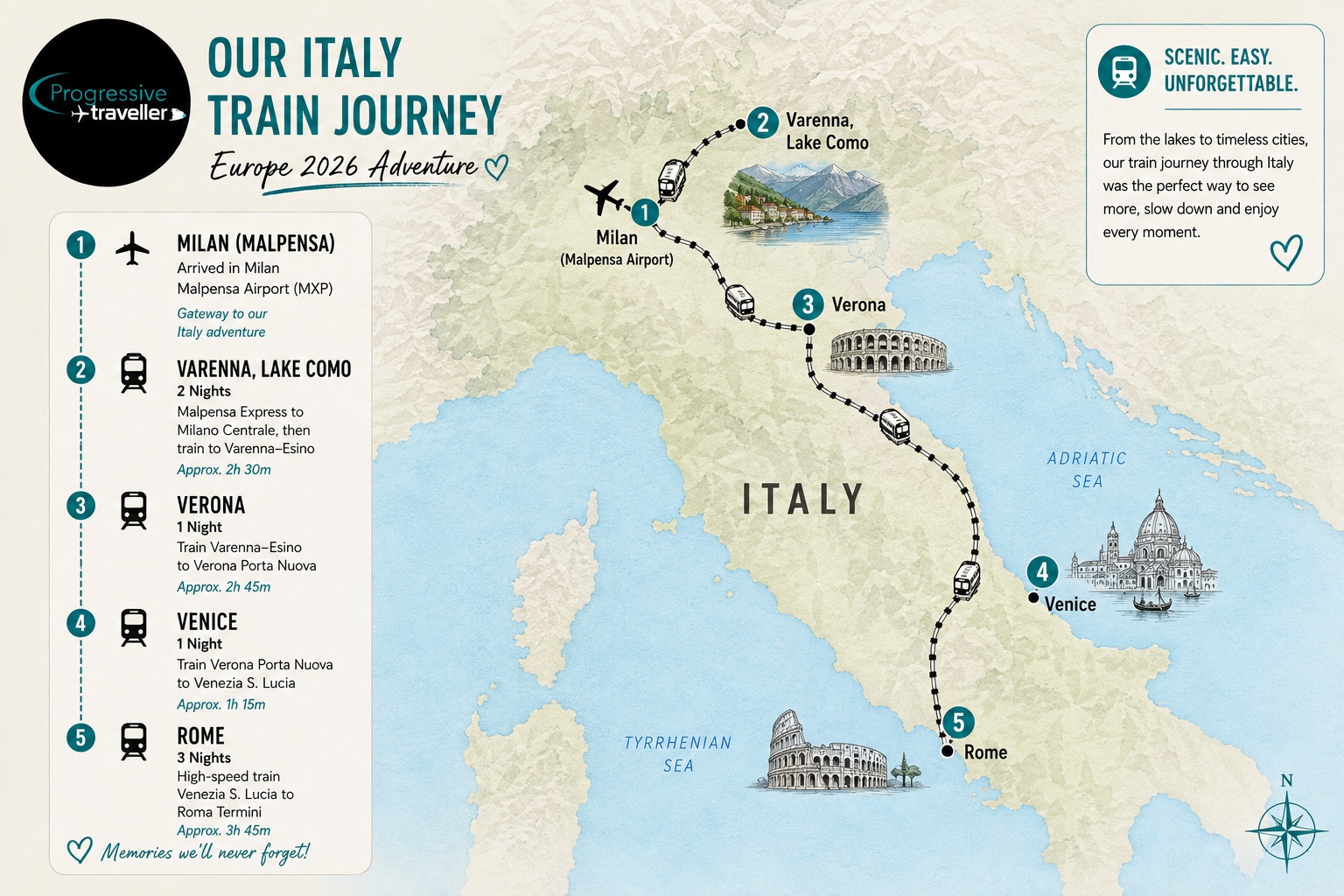
Our Italy Train Journey
Italy’s extensive rail network made travelling between destinations simple, comfortable and surprisingly scenic. After arriving at Milan Malpensa Airport (MXP), we travelled by train to Varenna on Lake Como, before continuing to Verona, Venice and finally Rome. For this itinerary, travelling by rail was far more relaxing than driving, allowing us to enjoy the changing landscapes while arriving directly in the heart of each city. The map below shows the route we followed through Italy during our Europe 2026 adventure.
Continuing Our Europe 2026 Adventure
After three unforgettable days exploring Rome, it was time to leave Italy behind and begin the next chapter of our Europe 2026 adventure.
Our journey continued west to Portugal, where we spent three nights in Lisbon, discovering its colourful neighbourhoods, historic trams and incredible food. From there, we travelled north through the university city of Coimbra before spending three nights in Porto, one of Europe’s most picturesque riverside cities.
While in Porto, we also took a memorable day trip to Braga, a city known for its beautiful churches, lively squares and the spectacular Bom Jesus do Monte Sanctuary.
If you’re planning a similar itinerary, these guides will help you make the most of Portugal:
- Lisbon Travel Guide (coming soon)
- Coimbra Travel Guide (coming soon)
- Porto Travel Guide (coming soon)
- Braga Day Trip Guide (coming soon)
- Portugal Travel Guide (coming soon)